мост из web2 в defi: поток покупки стратегии
cephei, telegram mini app на ton, defi-стратегии. за месяц конверсия в первую покупку выросла ×3.3, маркетинг держали константой.
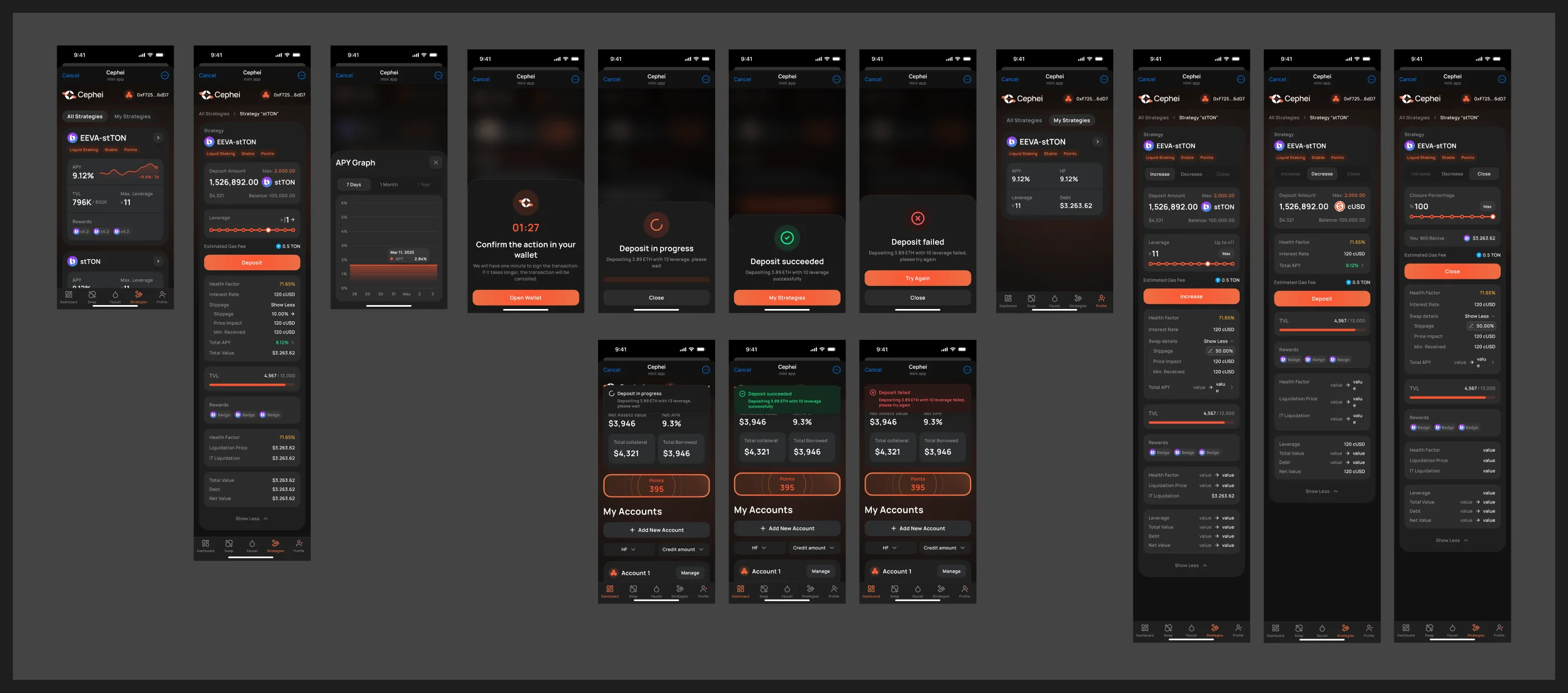
флоу целиком: выбор стратегии, настройка, депозит, управление.
о продукте
cephei, telegram mini app на ton, ~5 000 mau, ~600 dau. люди вкладывают в defi-стратегии: вносят стейблы, получают доходность. продукт проводит web2-юзера через сложную defi-механику, не влезая в жаргон.
роль
product designer
период
авг 2024 – январь 2025
контекст
задача от стейкхолдеров: спроектировать покупку стратегий с нуля, внутри продукта на ~5 000 mau. помимо потока покупки вёл referral и систему task-points, соц-задания с наградой в токене.
проблемы
барьер входа для web2
ядро аудитории это люди, привыкшие к традиционным финансам, и defi для них был непрозрачен, вносишь стейблы, получаешь доходность в других монетах, и заранее непонятно, сколько именно, а из этой неопределённости и растёт страх вкладывать.
абстрактные метрики
health factor, цена ликвидации, apy: для обычного пользователя это пустые слова, и моя задача была перевести их в язык, который чувствуешь.
конверсия 1%
первая покупка по всему приложению держалась на 1%, а стейкхолдеры хотели роста, не наращивая маркетинг.
процесс
- кастдев: на интервью выяснилось, что пользователи не понимают, что покупают, и страх звучал так: «я не понимаю, что происходит с моими деньгами».
- решение: живой конфигуратор прямо в интерфейсе покупки, который показывает весь исход сделки до оплаты.
- доводка: прогнал ~30 коридорных тестов, на финале десять человек из реальных пользователей продукта, и дорабатывал одно решение итерациями, без параллельных концептов и a/b.
- handoff: спеки в аннотациях figma, координация с фронтом и бэком.
- замер: на фичу ушло ~2 недели, маркетинг не трогали и считали в posthog, так что результат за ~1 месяц читался чисто.
решения
увидеть весь исход сделки до оплаты
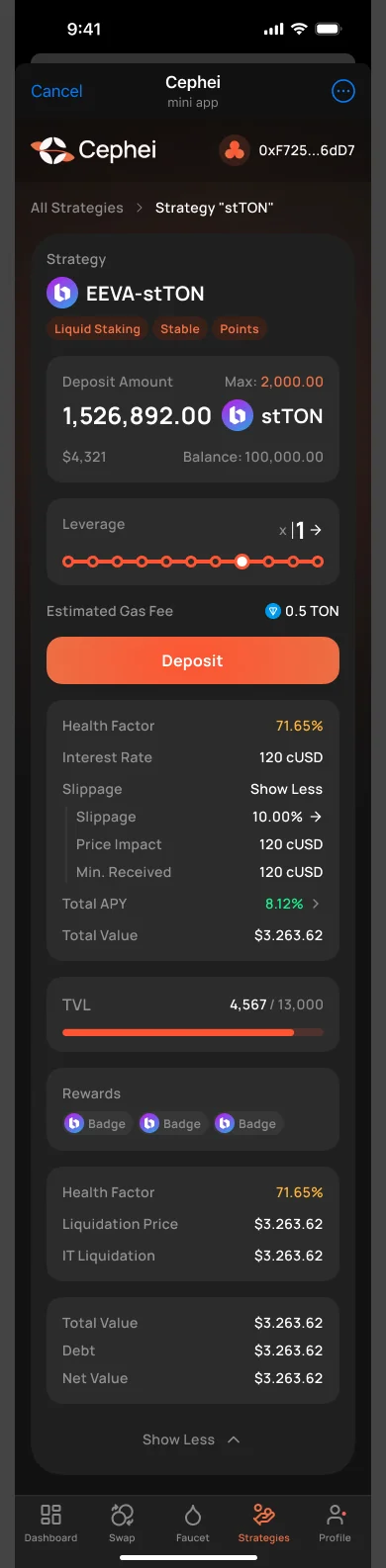
живой конфигуратор стратегии, где пользователь трогает всего два инпута, сумму и плечо, а весь исход сделки пересчитывается на лету: health factor, ставка, проскальзывание, apy, цена ликвидации, долг и итоговая стоимость. что бы ни напугало в сделке, оно уже на экране до оплаты, и тот же конфигуратор держит increase, decrease и close, проговаривая перед каждым подтверждением, что пользователь берёт и что отдаёт.
сначала выбор, потом деньги
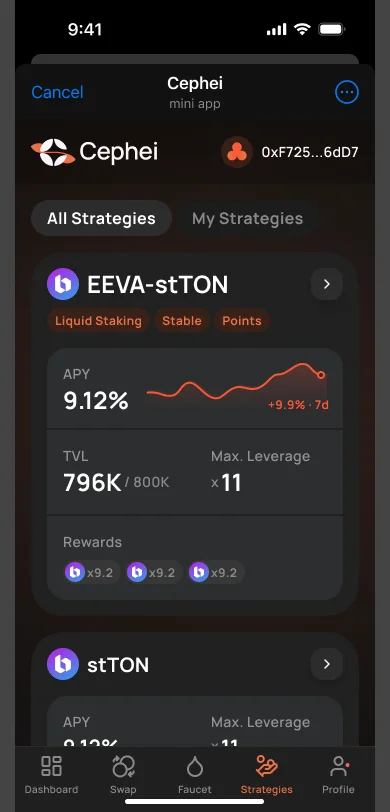
вкладка earn собирает карточки стратегий с apy, tvl, максимальным плечом, наградами в других токенах и графиком apy за 7 дней, месяц и год, так что пользователь сначала смотрит и выбирает, а в конфигуратор идёт уже осознанно.
один поток от стратегии до подтверждения
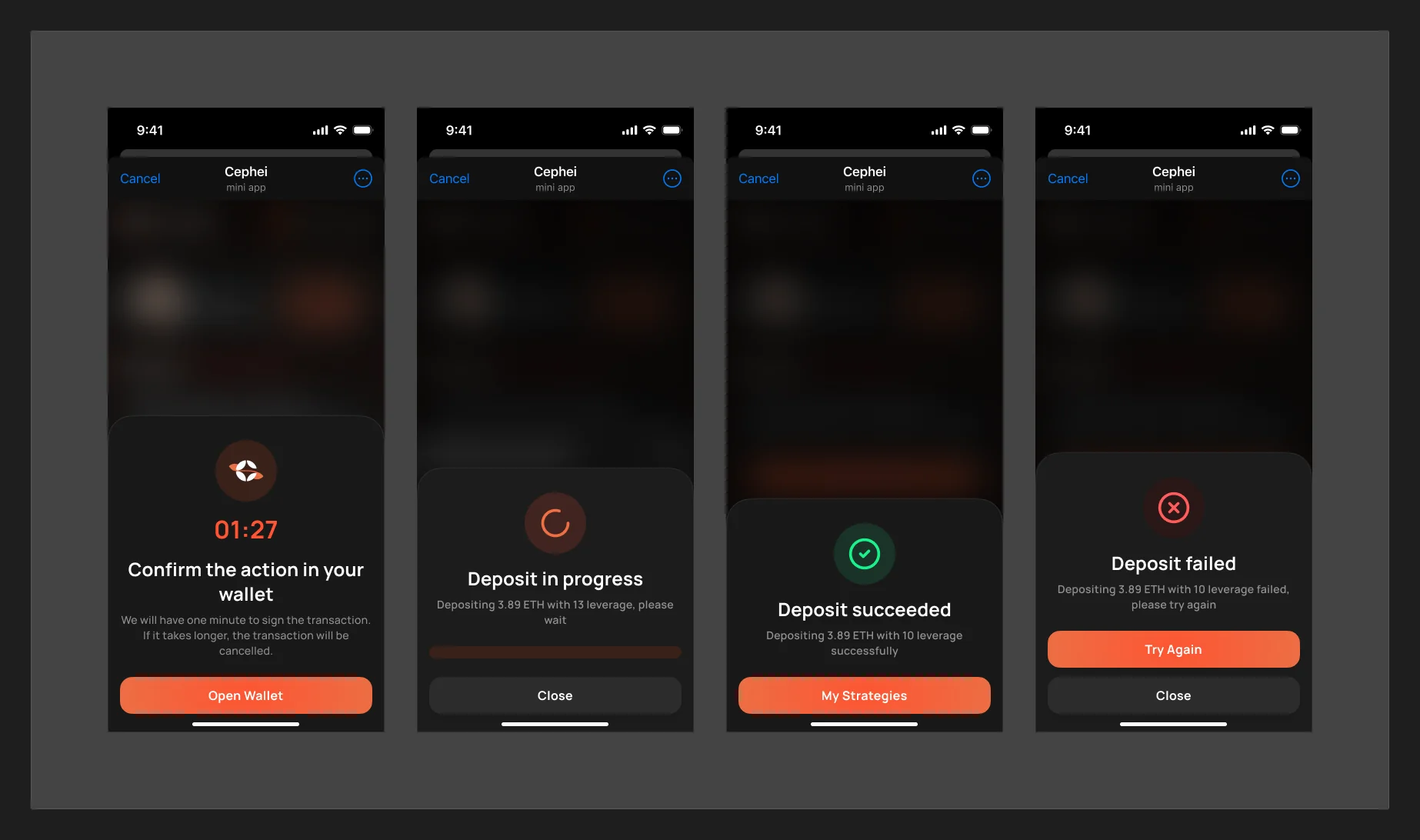
весь путь проходит прямо на экране деталей стратегии, одним потоком: подтверждение, кошелёк, прогресс, успех или ошибка. перед каждым дорогим действием флоу проверяет баланс и, если денег не хватает, предупреждает заранее и объясняет причину, чтобы пользователь не утыкался в мёртвую кнопку без понимания, что не так.
результаты
конверсия: конверсию замеряли специально в чистом окне: выкат подгадали под маркетинговый цикл, в маркетинге ничего не меняли и новых кампаний не запускали, считали в posthog. за ~месяц первая покупка выросла с 1% до 3.3%, это около 190 первых покупок, а по прикидке на типичный чек, порядка $50–90k первых депозитов.
оговорка: конверсию мерили по всему продукту сразу, без изолированного a/b этой фичи. она была главным запуском периода и, скорее всего, основной драйвер роста, но без отдельного теста весь прирост на неё одну я не вешаю.
что сработало: живой конфигуратор и единый поток покупки дали главный сдвиг, весь исход сделки виден на экране до оплаты, и web2-юзер покупает, не изучая defi.
настоящая джоба глубже: пользователь покупал спокойствие, понимание того, куда идут его деньги.
за кадром
важное решение: живой конфигуратор вместо пакетов с фиксированной ценой, чтобы каждый заходил со своим бюджетом и своим уровнем риска.
что хотел показать: что web2-новичка можно провести через сложную defi-механику, не упрощая продукт: прогрессивное раскрытие и знакомый язык вроде «депозита» и полного расчёта до оплаты.
что понял: барьер к первой покупке держался на неопределённости «что будет с моими деньгами», и когда пользователь видит весь исход сделки до оплаты, страх уходит сильнее, чем от любых объяснений доходности.
результат: за ~месяц конверсия по всему продукту выросла с 1% до 3.3%, а в маркетинге за это время ничего не меняли и новых кампаний не запускали.